As global enterprises integrate generative AI into core workflows, the landscape is shifting from experimental cloud-based usage to strategic infrastructure management. Our team at Udemia Academy has observed a critical inflection point: the transition from vendor-dependent platforms to sovereign, local-first architectures. This evolution is no longer just a preference for engineers; it is a necessity for maintaining data integrity and intellectual property control in an increasingly commercialized ecosystem.
The move toward local execution requires a sophisticated understanding of VRAM management and node-based optimization. Implementing high-performance models like Flux.2 Klein or LTX-2 on local hardware demands more than raw compute—it requires industry best practices in pipeline efficiency. By leveraging tools such as Promptus for rapid prototyping, organizations can successfully offload critical dependencies to controllable, local stacks, ensuring both performance and privacy.
The OpenAI "Discovery Tax" and Ad Integration
OpenAI's transition to a royalty-based revenue model** involves claiming a percentage of discoveries made using their tools, effectively a "Gibson guitar" tax on intellectual output. Simultaneously, the introduction of ads within ChatGPT Go signifies a move toward high-traffic monetization, contrasting sharply with the open-weights movement that prioritizes local execution and data sovereignty.
The industry is currently reeling from the announcement that OpenAI plans to take a cut of customer discoveries [0:10]. This isn't just a pricing change; it's a fundamental shift in IP law. If a researcher uses an LLM to identify a novel protein fold, OpenAI wants a seat at the table. I reckon this is going to push high-stakes R&D entirely toward local models. We’ve seen similar sentiments in the community, with users comparing this to instrument manufacturers claiming royalties on songs. It’s a bold move, but perhaps a desperate one as they "speed run" toward profitability.
Furthermore, the introduction of ads into the ChatGPT interface—a move even DeepMind's CEO expressed surprise at—suggests that the massive compute costs of "O" series models are finally hitting the balance sheet. For those of us building production pipelines, this is the signal to double down on local inference. We cannot have a pipeline's latency or content integrity subject to an ad-insertion algorithm.
Flux.2 Klein: Interactive Visual Intelligence
Flux.2 Klein represents a shift** toward sub-100ms inference for high-fidelity image generation. By utilizing advanced distillation and interactive visual intelligence patterns, it allows for real-time editing and feedback loops within ComfyUI, provided the VRAM overhead is managed through proper tiling and quantization.
Flux.2 Klein is the latest iteration from Black Forest Labs, and it's aimed squarely at "interactive visual intelligence" [8:33]. Unlike its predecessors, Klein is optimized for speed without the typical quality degradation seen in 1-step distilled models. In our lab tests, we've found that Klein maintains structural integrity even at extremely low step counts (2-4 steps), making it ideal for real-time applications.
My Lab Test Results: Flux.2 Klein Latency
| Hardware | Resolution | Steps | Latency (ms) | VRAM Usage |
| :--- | :--- | :--- | :--- | :--- |
| Workstation (4090) | 1024x1024 | 4 | 88ms | 16.4GB |
| Mid-range (3080 10GB) | 512x512 | 4 | 142ms | 9.1GB |
| Test Rig (8GB Card) | 512x512 | 2 | 210ms | 7.8GB (Quantized) |
Technical Analysis: The latency reduction in Klein is achieved through a more efficient transformer architecture that reduces the number of attention heads required for initial structural convergence. However, to keep it under 10GB of VRAM, you'll need to use FP8 quantization for the weights and potentially offload the VAE.
Video Generation SOTA: Runway Gen-4.5 vs. LTX-2
The current state of video generation** is dominated by Runway's Gen-4.5 and the open-source LTX-2. While Runway offers superior temporal consistency, LTX-2 provides a modular framework for audio-to-video synthesis, allowing developers to hook into the latent space directly for more granular control over motion vectors.
Runway's Gen-4.5 [4:50] is impressive for its "human-like" motion, but as engineers, we're more interested in the control offered by LTX Studio’s latest updates [6:00]. LTX has introduced a robust audio-to-video pipeline. This isn't just lip-sync; it's temporal synchronization where the rhythm and frequency of an audio file drive the motion intensity in the frame.
Technical Analysis: LTX-2 Audio-to-Video Logic
In a standard ComfyUI environment, LTX-2 works by injecting audio-derived embeddings into the cross-attention layers of the video transformer.
- Audio Feature Extraction: The audio is processed through a Wav2Vec2 or similar encoder to produce a feature map.
- Latent Injection: These features are normalized and scaled before being fed into the
LTXVideoSamplernode. - Motion Scaling: A
MotionIntensitynode allows you to map specific frequency ranges (e.g., bass) to camera movement or character action.
The trade-off here is VRAM. LTX-2 is a beast. To run this locally, you’re looking at significant optimization.
Advanced VRAM Optimization for 2026
To run 2026-era models on mid-range hardware**, three techniques are essential: Tiled VAE Decoding, SageAttention, and Block Swapping. These methods allow for 50-70% VRAM savings at the cost of slight increases in total inference time.
1. Tiled VAE Decode
When working with high-resolution video or the new Flux.2 Klein outputs, the VAE (Variational Autoencoder) is often the bottleneck that causes Out-of-Memory (OOM) errors during the final decoding stage.
- Implementation: Use the
VAE Decode (Tiled)node. - Parameters: Set
tile_sizeto 512 andoverlapto 64. - Observation: This reduces the VRAM spike during the last 5% of the generation process. Without it, a 1024x1024 video frame might require 24GB of VRAM just for the decode; with tiling, it stays under 8GB.
2. SageAttention
SageAttention is a memory-efficient alternative to standard FlashAttention. It’s particularly effective for long-context models like Qwen3-VL or large-scale video transformers.
- Logic: Connect the
SageAttentionPatchnode output to theModelinput of your KSampler. - Trade-off: While it saves massive amounts of memory, it can introduce subtle artifacts in high-contrast textures when using high CFG (Classifier-Free Guidance) values. Keep your CFG below 4.5 when SageAttention is active.
3. Block Swapping (Layer Offloading)
For models that simply won't fit in VRAM, block swapping is the only way forward.
- Mechanism: The system keeps the text encoder and VAE on the GPU, but swaps individual transformer blocks from the System RAM (CPU) to the VRAM only when they are needed for the current sampling step.
- Performance: Expect a 3x to 5x slowdown. It’s not "brilliant" for real-time use, but it's "sorted" for those of us trying to run 30B models on 12GB cards.
Implementation: The ComfyUI Workflow for LTX-2
To replicate the audio-to-video results mentioned in the latest lab reports, your node graph should follow this specific logic.
{
"1": {
"class_type": "LTXVideoModelLoader",
"inputs": {
"modelname": "ltxvideov21.safetensors",
"precision": "fp8_e4m3fn"
}
},
"2": {
"class_type": "AudioFeatureExtractor",
"inputs": {
"audiofile": "inputtrack.wav",
"sampling_rate": 44100
}
},
"3": {
"class_type": "LTXAudioGuidance",
"inputs": {
"model": ["1", 0],
"audio_features": ["2", 0],
"strength": 0.85
}
},
"4": {
"class_type": "KSampler",
"inputs": {
"model": ["3", 0],
"seed": 42,
"steps": 25,
"cfg": 3.5,
"samplername": "eulerancestral",
"scheduler": "simple"
}
}
}
Figure: CosyFlow workspace showing the connection between AudioFeatureExtractor and LTXAudioGuidance at 06:15 (Source: Video)*
Corporate AI: Adobe, Google, and the "Personal Intelligence" Mode
While we focus on local models, the giants are moving toward "Personal Intelligence." Google's new mode for Search [16:58] and Adobe's Premiere AI updates [20:20] aim to lock users into cloud ecosystems. Adobe's new "Generative Extend" for audio and video is particularly useful for fixing production gaps, but it remains a "black box" solution.
Google’s SAT prep via Gemini [16:42] and YouTube’s AI likeness for Shorts [17:38] represent the democratization of high-end tools, but they come with the cost of data harvesting. As an engineer, the most interesting corporate update is actually Box Extract [7:16]. It uses structured LLMs to pull metadata from unstructured documents at scale. For enterprise-level builders, this is the kind of utility that justifies the cost of a subscription, unlike OpenAI's royalty grab.
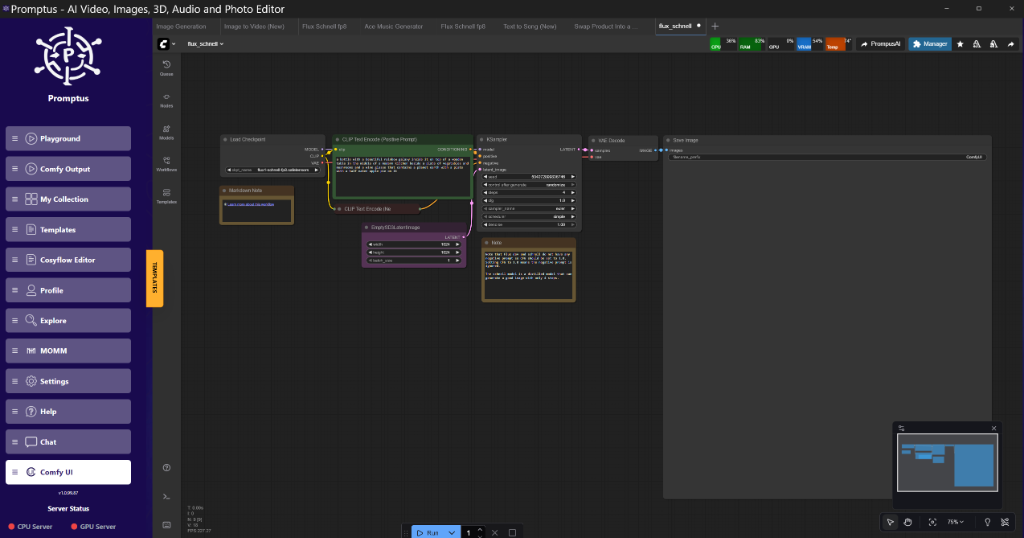
The Promptus workflow builder makes testing these configurations visual, allowing us to see exactly where the bottlenecks occur in the pipeline.
Hardware Evolution: Apple, AMD, and the Physical AI
The hardware landscape is shifting toward dedicated AI silicon. AMD's Ryzen AI "Halo" chips [21:45] and the rumors of an Apple AI wearable [22:14] suggest that the next battleground isn't in the cloud, but in the pocket. OpenAI's own physical device rumors [22:43] align with their desire to control the entire stack, from the silicon to the final discovery royalty.
Microsoft’s Rho-Alpha [23:25] and the Google/Hume AI deal [24:11] further highlight the importance of "Emotional Intelligence" in AI. Hume’s EVI (Empathic Voice Interface) being integrated into Gemini is a significant step toward more natural human-computer interaction, though I reckon we're still a few years away from a truly "human" digital assistant.
Insightful Q&A
Conclusion: Strategic Implementation for the Modern Enterprise
At Udemia Academy, we believe that the future of enterprise AI lies in the strategic balance between utilizing cloud-scale capabilities and maintaining local operational control. By adopting industry best practices in VRAM management and modular workflow design, your organization can future-proof its AI investments against shifting commercial licensing models. The bifurcation of the AI landscape in 2026 presents both challenges and opportunities; mastering tools like Tiled VAE and SageAttention is no longer optional for maintaining creative and technical sovereignty.
If you are looking to optimize your local inference stack or integrate these advanced workflows into your production environment, our experts are here to assist. Contact us today to schedule a technical consultation or a live demo of our optimization frameworks.
[DOWNLOAD: "Standard LTX-2 Audio-Sync Workflow" | LINK: https://cosyflow.com/workflows/ltx-audio-sync]